Bed Bugs
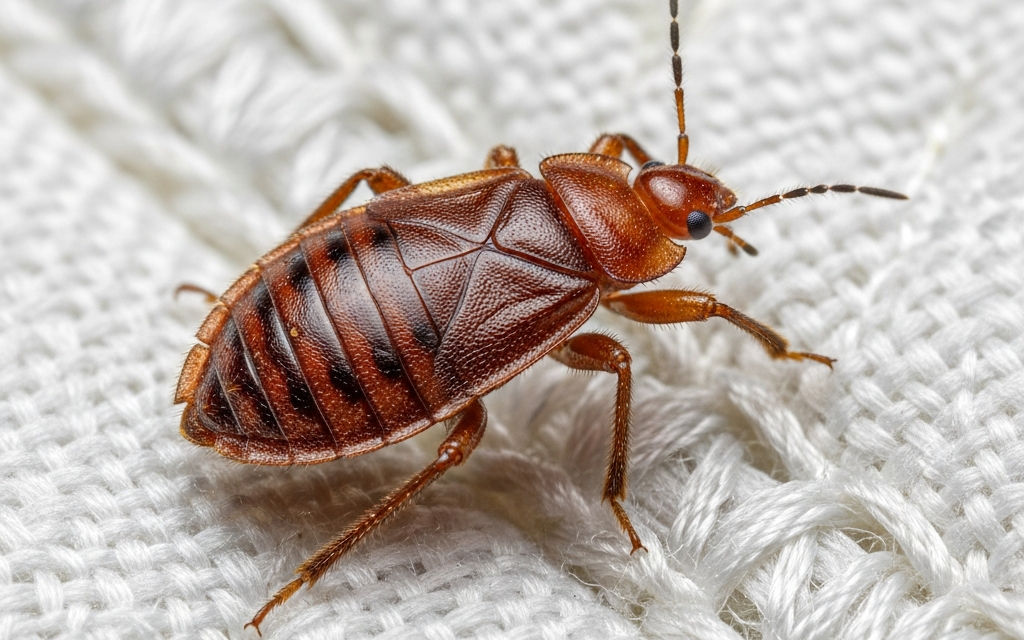
Bed bugs (Cimex lectularius) are blood-feeding insects that feed exclusively on blood, preferably human. They have resurged as a worldwide pest in recent decades due to increased international travel and resistance to conventional insecticides, which makes them one of the hardest pests to control. For this reason, their management demands a professional Integrated Pest Management (IPM) approach combining inspection, heat treatment and follow-up.
Identification
Size: 4 to 7 mm, comparable to an apple seed. Color: reddish brown; they become darker and swollen after feeding. The body is oval and flattened, wingless, which lets them hide in very narrow cracks. Their eggs are tiny, whitish and stick in clusters to surfaces.
Habitat: mattress seams, headboards, bed frames, wall cracks, behind picture frames and baseboards, and in electrical outlets. They are active mainly at night and move toward where people sleep, drawn by body heat and carbon dioxide.
Signs of infestation
- Dark or blackish spots on sheets and mattresses (fecal matter), and small blood stains after crushing them during sleep.
- Shed skins (exuviae) and egg casings in seams and cracks.
- A sweet, unpleasant odor characteristic of severe infestations.
- Bites in a line or cluster, usually on areas exposed during sleep (arms, neck and face).
Risks
Although bed bugs carry pathogens, they have not been shown to effectively transmit diseases. The main harm is different: their bites cause intense itching, secondary infections from scratching, chronic insomnia, anxiety and psychological stress. Two myths are worth clearing up: having bed bugs does not mean poor hygiene, since they do not distinguish between clean and dirty environments and travel in luggage, clothing and used furniture, infesting luxury hotels and hostels alike. In the hospitality and lodging industry, an infestation can devastate an establishment's reputation, and treatment and remediation costs are significant.
How Fucesa controls it
Because of their resistance to many insecticides, bed bugs are not eliminated with a simple spray. At Fucesa we apply a combined Integrated Pest Management protocol:
- Thorough inspection: locating focal points in mattresses, headboards, furniture, cracks and baseboards to define the true scope of the infestation.
- Heat treatment: controlled heating of rooms above 50 °C, a lethal temperature for eggs, nymphs and adults at every life stage, leaving no chemical residue.
- Steam and vacuuming: high-temperature steam penetrates seams and cracks, while vacuuming removes visible specimens and eggs.
- Targeted residual treatment: localized application in specific harborage to eliminate surviving individuals and prevent resurgence.
- Follow-up: subsequent inspections to confirm eradication, since a single untreated focus can restart the infestation.
Prevention
- Inspect mattresses, headboards and furniture when traveling or acquiring used furniture, and check luggage when returning from a trip.
- Wash bedding and clothing at a minimum of 60 °C and dry on high heat, which kills all life stages.
- Vacuum mattresses, frames and cracks frequently and dispose of the bag immediately in a sealed container.
- Reduce cracks and hiding spots by sealing baseboards, frames and openings in the bedroom; use bed-bug-proof encasements on mattresses and box springs.
When to call a professional
Bed bugs are almost never eradicated with home remedies: at the first confirmation of bites in a line, stains on sheets or a sighting of specimens, it is best to contact a professional. It is especially urgent in hotels, hospitals, nursing homes, schools and apartment buildings, where the pest spreads quickly from one room to another.
Fucesa has more than 40 years of experience in pest control. We operate with personnel certified under NOM-256-SSA1-2012 and registered with COFEPRIS, applying heat and targeted treatments from our headquarters in Toluca and our base in Queretaro.