Termites: types, control and treatment
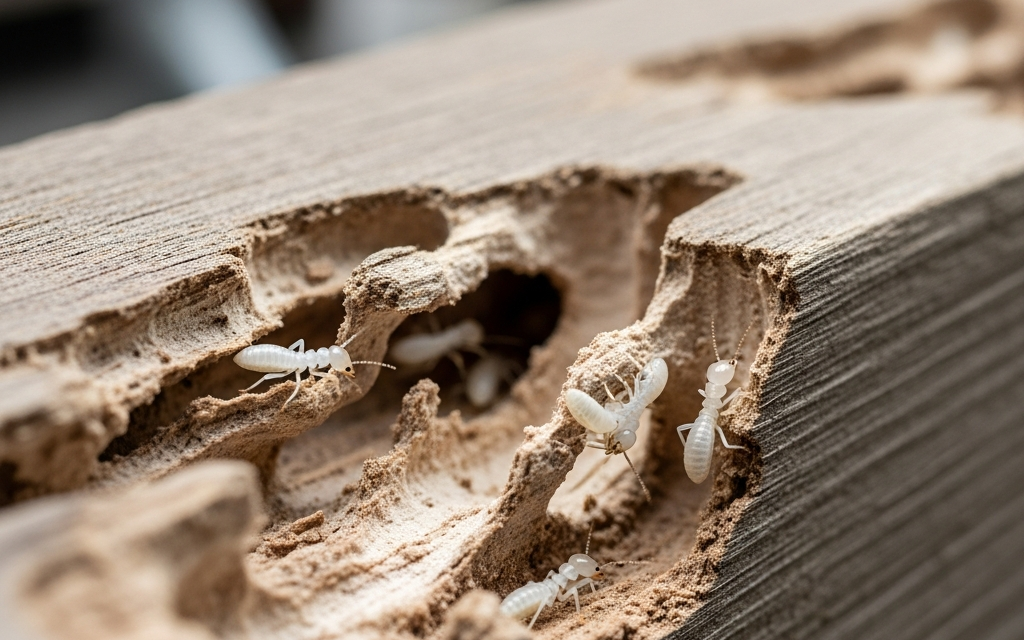
Termites are social insects that feed on cellulose in wood, paper, and plant materials. In Mexico, termite control matters for homes, businesses, and any property with structural wood: colonies can work for years unseen and leave costly damage. This guide covers common types in the country, signs, DIY limits, IPM, and when to treat or fumigate with a professional.
Types of termites in Mexico
Not all termites behave the same. Identifying the type guides treatment: what works against subterranean termites is not always enough for drywood termites.
Subterranean termites (Reticulitermes and Coptotermes)
These are among the most destructive species across much of central and southern Mexico. They nest in soil or moist areas and reach structures through mud tubes. Coptotermes (Formosan and related species) can build very large colonies; Reticulitermes is common in temperate areas around the Valley of Mexico. They need ongoing moisture and a path from soil to wood.
Drywood termites (Cryptotermes and related)
They live inside dry wood (frames, furniture, beams, roofs) and do not need soil contact. In Mexico, Cryptotermes brevis is especially relevant in warm regions and in older or imported wood pieces. They leave frass pellets and attack in sections; damage can stay hidden until the piece weakens.
Dampwood termites and others
Dampwood termites attack wood with high moisture, often from leaks, seepage, or decay. In Mexico you may also see species associated with outdoor timber or posts. Less common inside dense urban interiors than subterranean or drywood termites, but relevant wherever chronic moisture affects the building.
How to identify termites (and not confuse them with ants)
Termites live in castes. Mistaking a termite swarm for flying ants delays treatment:
- Size: about 4 to 15 mm depending on the caste.
- Color: whitish or translucent workers; soldiers with darker heads; darker winged reproductives.
- Castes: queen, king, workers, soldiers, and winged reproductives.
- Difference from ants: termites have straight antennae, a broad waist, and four equal wings; ants have a narrow waist and unequal wings.
Signs of a termite infestation
Because they work out of sight, early detection depends on traces—not on seeing thousands of insects at once:
- Mud tubes: pencil-thick earthen galleries on foundations and walls; typical of subterranean termites.
- Hollow wood: beams or frames that sound hollow when tapped; the outer shell often looks intact.
- Shed wings: piles of identical wings near windows and lights after swarming (often in warm/humid seasons).
- Frass or fine dust: pellets or powder under furniture and frames; more typical of drywood termites.
- Blistered paint or soft floors: rippled or yielding surfaces from advanced internal damage.
- Doors and windows that stick: frames warped after internal wood loss.
Damage termites cause
The main risk is structural and financial—not a classic disease-transmission story. An active colony can consume wood continuously and, without treatment, weaken beams, columns, floors, roofs, and frames. Damage is often advanced by the time it is obvious.
In Mexico many home policies limit or exclude termite damage, so early inspection and professional treatment usually beat waiting for a major repair. Avoid medical overclaim: termites are not, by themselves, a classic disease vector; the core issue is building integrity and safety when load-bearing elements are compromised.
DIY limits vs professional control
Helpful home steps exist (reduce moisture, keep firewood off soil, seal cracks), but DIY has clear ceilings:
- It rarely reaches the colony: retail sprays kill visible workers, not the queen or hidden nest.
- Wrong diagnosis: treating drywood like subterranean (or the reverse) wastes product and time.
- Product risk: applying termiticides without training, dose control, or gear can be ineffective or unsafe.
- Hidden damage: without inspection you may treat one wall while activity continues elsewhere.
If you already see mud tubes, heavy frass, swarms, or hollow structural wood, get a professional inspection—not another aerosol.
IPM: Integrated Pest Management for termites
Integrated Pest Management (IPM) combines inspection, exclusion, reducing favorable conditions, and targeted treatment only when needed:
- Inspection and monitoring: identify species, entry paths, and extent of damage.
- Moisture and access correction: leaks, drainage, ventilation, wood-to-soil separation.
- Barriers and targeted treatments: perimeter termiticides, baits, localized injection, or wood treatments as appropriate.
- Follow-up: confirm activity has stopped and reduce reinfestation risk.
At Fucesa we align work with good practice and applicable frameworks (including NOM-256-SSA1-2012 and regulated products when relevant), without overstating results.
When to fumigate or treat for termites
People often search for “fumigation,” but the right treatment depends on termite type and construction—it is not always a whole-building fumigation.
- Treat now if: you have active mud tubes, recurring swarms, ongoing frass, compromised structural wood, or prior inspection evidence.
- Subterranean: often need chemical barriers, bait systems, or a combination, plus moisture correction.
- Drywood: may need localized injection, spot treatments, or in select cases heat or other specialized methods; sometimes limited to specific pieces.
- Do not wait for “next year”: each activity season can expand galleries and repair cost.
How Fucesa controls termites
We design the plan around the termite type and the property:
- Professional inspection: foundations, structural wood, soil-wood contact, and moisture points.
- Chemical barriers: termiticides in the perimeter and activity zones when subterranean termites apply.
- Bait systems: stations workers carry back to the colony to reduce it systemically.
- Wood treatment: protectants and localized injection; for drywood, spot options after assessment.
- Follow-up: post-treatment monitoring to confirm control and adjust if activity returns.
Termite prevention
Reducing moisture and wood-to-soil bridges is the best ongoing defense:
- Moisture control: ventilation, leak repair, and drainage around foundations.
- Wood-soil separation: keep firewood, scrap lumber, and outdoor furniture off bare soil.
- Design and barriers: construction details, sealing cracks, and physical barriers in new builds when appropriate.
- Periodic inspections: yearly checks, or after remodels, settling cracks, or swarm season.
- Wood and storage: inspect used furniture, boxes, and pallets before bringing them indoors or into storage.
When to call a professional
At any sign of mud tubes, hollow wood, swarms, piled wings, or frass, act soon: with termites, waiting usually costs more. Controlling an established colony is not a DIY project; it needs diagnosis, the right products, and access to hidden areas.
Fucesa has decades of experience protecting properties from our base in Toluca, with coverage in the State of Mexico, Mexico City, and Querétaro. We integrate inspection, treatment, and follow-up under IPM.
Get a termite control quote
Suspect termites in a home, business, or wood structure? Request a quote for our insect control service. We cover Toluca, the State of Mexico, Mexico City, and Querétaro. Reach us via contact and we will build a tailored IPM plan—no fake reviews, no medical overclaims.