Spiders: types and control
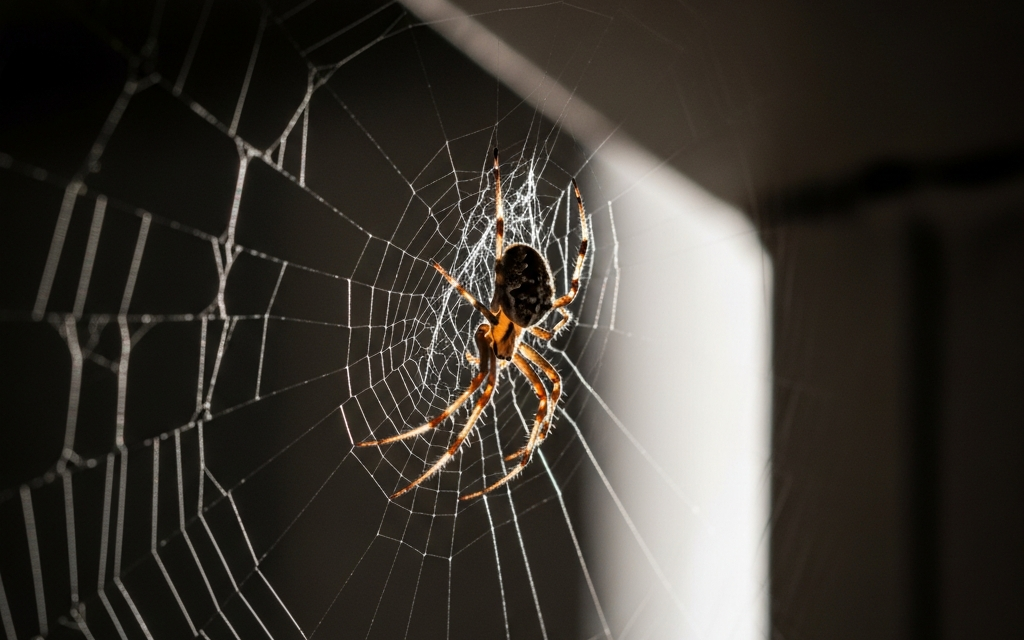
Spiders (order Araneae) are predatory arachnids: most naturally reduce mosquitoes, flies, cockroaches, and other insects in and around buildings. If you are comparing spider types in Mexico, separate everyday household species from those of medical importance. Integrated Pest Management (IPM) does not aim to wipe out every spider; it focuses on exclusion, harborage reduction, and targeted action only when risk or pest pressure is real.
Common spider types in Mexico
These spider types show up often in homes, warehouses, and businesses in central Mexico. Correct identification prevents unnecessary alarm and clarifies when exclusion is enough versus when professional service is warranted.
Black widow (Latrodectus mactans)
Shiny black body; females often show a red hourglass mark on the underside of the abdomen. About 8–15 mm. They build irregular, tangled webs near the ground in voids, woodpiles, shoes, or stored materials. This is a medically important species in Mexico—do not handle it.
Brown recluse or fiddleback (Loxosceles spp.)
Light to medium brown with a violin-shaped mark on the cephalothorax. About 8–12 mm. Six eyes in three pairs (most spiders have eight). Prefers dry, low-traffic spots: closets, behind furniture, basements, and boxes. Also medically important. A safe photo or specimen can help identification for a clinician; do not use home remedies or tourniquets.
False widow (Steatoda spp.)
Similar look to the black widow, but usually brown or black without the classic red hourglass (sometimes with light markings). Easy to confuse. When unsure, treat it as a potential risk species and avoid contact.
Cellar / daddy-long-legs spider (Pholcus phalangioides)
Small body with very long legs; irregular webs on ceilings, basements, and bathrooms. Common and harmless to people. Heavy numbers often point to moisture or the insects they feed on.
Common house-web spiders (Parasteatoda, Tegenaria/Eratigena and related)
Includes the common house spider and basement or shed species. Webs in corners, beams, and unused rooms. Almost always harmless; the practical issue is web buildup and possible links to other pests.
Jumping spiders (Salticidae) and wolf spiders (Lycosidae)
Jumping spiders are daytime hunters with keen vision and no residential sheet webs; wolf spiders hunt on the ground, mostly outdoors. They rarely become an indoor pest problem, though they may wander inside occasionally.
Tarantulas (Theraphosidae)
Mexico’s largest spiders; intimidating by size, but usually shy. Several species are protected. Fucesa’s approach is responsible capture and relocation, not extermination. A tarantula sighting calls for different handling than a widow or recluse.
When spiders are a pest problem
An occasional spider is not an infestation. It becomes a pest problem when:
- New webs build up quickly in storage rooms, ceilings, or customer-facing areas.
- Black widow or brown recluse / fiddleback spiders are confirmed or suspected in frequently used spaces.
- Spider activity tracks with other pests (their food): cockroaches, flies, mosquitoes, or ants.
- Sensitive sites—schools, hospitals, hotels, food warehouses—need a stricter hygiene and safety standard.
Signs of activity
- Web buildup in corners, frames, beams, and storage rooms.
- Whitish or silky egg sacs on webs and hidden surfaces.
- Repeated sightings in low, poorly lit areas when moving stored items.
- Abundant insects in the same space—often the underlying driver.
Medical importance: identification and when to seek help
Most household spider bites are mild. Real risk concentrates in black widow (latrodectism) and brown recluse / fiddleback (loxoscelism). This page covers identification and prevention only: it is not medical care and does not recommend drugs or home treatments.
Seek medical attention right away for a bite suspected from a widow or recluse, intense pain, systemic illness, progressive swelling, skin changes around the wound, or if the person is a child, older adult, or otherwise at higher risk. If safe, photograph or keep the specimen for identification. Do not apply tourniquets or try to suck out venom.
Exclusion and prevention
Exclusion cuts entry and harborage without constant spraying:
- Seal gaps at doors, windows, foundations, and pipe or cable penetrations.
- Tidy storage rooms, garages, and closets; raise boxes off the floor and reduce clutter where webs form.
- Remove webs and egg sacs regularly; shake stored clothes and shoes before use.
- Wear gloves when moving firewood, debris, or stored materials.
- Reduce the insects spiders feed on and cut excessive outdoor lighting that attracts those insects.
How Fucesa controls spiders (IPM)
Fucesa uses Integrated Pest Management: most spiders are allies, so we do not spray blindly. The protocol combines identification, harborage reduction, and targeted action only when risk or recurrence justifies it.
- Inspection and identification of spider types present and of associated insect pests.
- Mechanical removal of webs and egg sacs; organization of storage areas.
- Relocation of harmless specimens when feasible and safe.
- Control of the food source (insects) to reduce why spiders stay.
- Targeted residual treatment only when medically important species are confirmed or pressure is high in critical zones, applied by certified technicians.
When to call Fucesa
Call for professional service when black widow or brown recluse activity is suspected or confirmed, when spider problems recur with other pests, or when the site needs documented control (commerce, industry, healthcare, education). We serve Toluca, Mexico City (CDMX), and Querétaro with personnel certified under NOM-256-SSA1-2012 and registered with COFEPRIS.
Need spider control or help identifying spider types in Toluca, Mexico City (CDMX), or Querétaro? Request our insect control with certified technicians. Over 40 years of experience from our Toluca headquarters and Querétaro base. Contact us for a quote—do not handle medically important species yourself.