Tarantulas
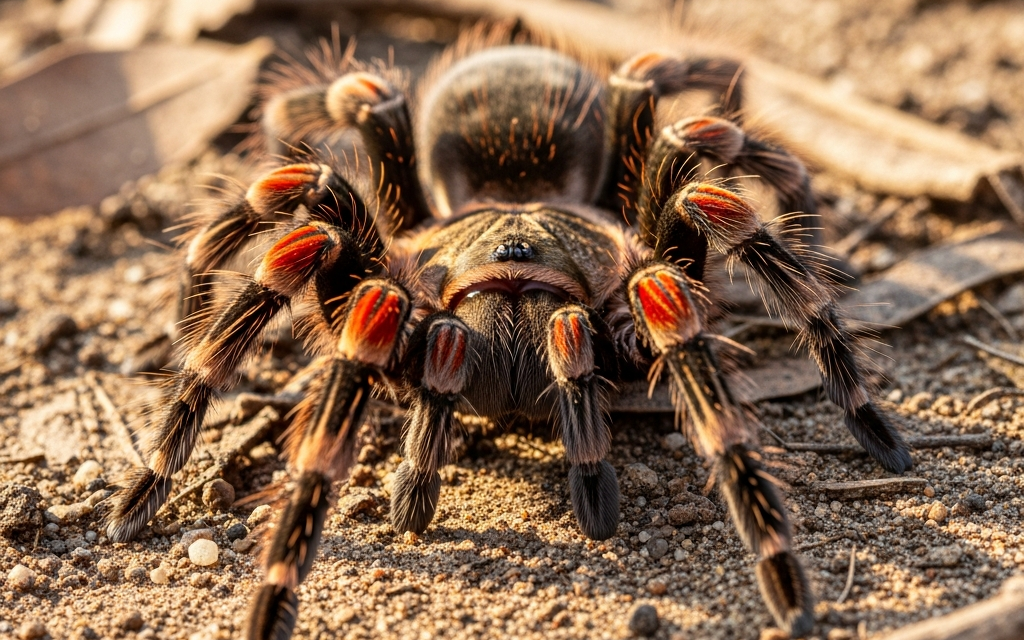
Tarantulas (family Theraphosidae) are the world's largest spiders, with over 60 species recorded in Mexico. Species like Brachypelma hamorii (the red-knee tarantula) are iconic to Mexican fauna. Although their large size and hairy appearance cause alarm when they enter homes or facilities, they are shy predators that are, in the vast majority of cases, harmless to people. Understanding their biology is the first step toward managing them responsibly and within the law.
Identification
Recognizing a tarantula prevents confusion with other spiders and helps you decide on the right approach. The main characteristics are:
- Size: body 5 to 10 cm; leg span up to 15 cm or more.
- Color: dark brown, black, or with red and orange markings depending on the species.
- Body: robust and hairy, with prominent chelicerae and eight thick legs.
- Habitat: ground burrows, forested areas, gardens, basements, and storage areas.
- Activity: nocturnal. Males are more visible during mating season, when they travel long distances in search of females.
Signs of presence
Unlike pests that hide inside structures, tarantulas usually give themselves away through direct sightings. The most common signs are:
- Sightings: live specimens in yards, garages, gardens, or near ground-level entrances, especially at dusk.
- Molts (exuviae): empty exoskeletons the spider sheds as it grows; they look like a complete tarantula but are hollow and brittle.
- Burrows: holes in the ground, often lined with silk, in nearby gardens and lots.
- Silk threads: traces of silk near cracks or burrow entrances.
Risks to people and businesses
It is important to be honest: tarantulas pose a very low risk to human health. Their bite is uncommon and, when it happens, usually causes local pain and swelling comparable to a bee sting; it is rarely dangerous except in allergic individuals. The second risk is the urticating hairs some species release from the abdomen as a defense, which can cause dermatitis and conjunctivitis if touched or if they reach the eyes.
In practice, the main impact is psychological. Their size causes panic and their presence is unacceptable in commercial, hotel, or food-handling environments, where it can affect the perception of hygiene and the peace of mind of customers and staff. For that reason the goal of management is not to kill the animal but to remove it safely and reduce the conditions that attract it.
How Fucesa controls it
Tarantulas are beneficial predators that keep insect populations in check, and several Mexican species of the genus Brachypelma are legally protected under NOM-059-SEMARNAT. That is why Fucesa's service is not extermination but responsible capture and relocation, integrated within an Integrated Pest Management (IPM) framework:
- Inspection and identification: the species is confirmed and we assess whether it is a protected specimen before acting.
- Capture and relocation: safe manual handling by trained personnel and release of the specimen in a suitable habitat, in compliance with environmental law.
- Habitat reduction: removing debris, controlling vegetation, and tidying the surroundings so the property is no longer attractive.
- Food-source control: managing the insect populations they feed on so tarantulas find no prey near the structure.
Prevention
The best strategy is to keep them out and make the environment less inviting:
- Seal entry points: close cracks, joints, and ground-level openings, and fit weather stripping on exterior doors.
- Exterior lighting: reduce or redirect lights that attract insects, the tarantula's prey, near entrances.
- Manage the surroundings: keep gardens trimmed and remove debris, firewood, and stacked materials where they can shelter.
- Order and cleanliness: check boxes, footwear, and rarely used storage corners before handling them.
When to call a professional
It is worth contacting a professional when there are repeated sightings, when tarantulas appear inside sensitive areas such as hotels, restaurants, or food warehouses, or when you are unsure of the species. Killing the specimen is never recommended: besides being unnecessary, it may be a protected species whose handling requires authorized personnel.
At Fucesa we have more than 40 years of experience in pest control in Toluca and the Bajío region, with our operations base in Toluca and a presence in Queretaro. We work in accordance with NOM-256-SSA1-2012 and use products and procedures backed by COFEPRIS, always prioritizing Integrated Pest Management and respect for protected wildlife.