Mosquitoes
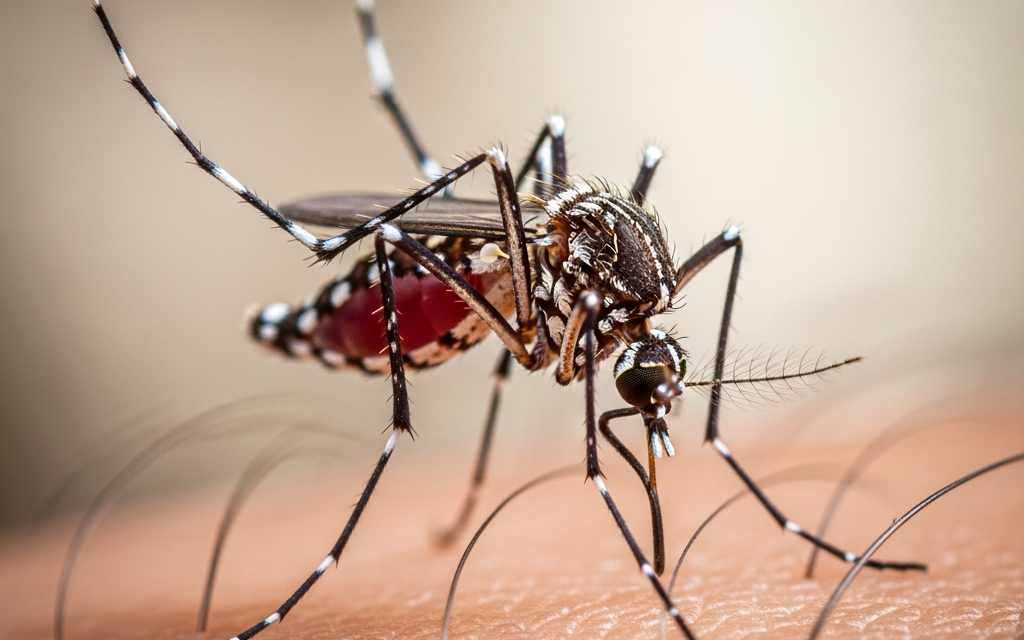
Mosquitoes (family Culicidae) are blood-feeding insects considered the deadliest animals in the world due to the diseases they transmit. In Mexico, the most important species are Aedes aegypti (vector of dengue, Zika, and chikungunya) and Culex quinquefasciatus (vector of West Nile virus). Their ability to breed in small volumes of standing water makes them a pest that is hard to eradicate without an approach aimed at their breeding sites.
Identification
Mosquitoes measure from 3 to 6 mm. Aedes aegypti is dark with characteristic white markings on its legs and body, while Culex shows more uniform tones. They have a long proboscis to pierce skin and suck blood, and their wings produce the characteristic buzzing sound in flight. Only females bite: they need the proteins in blood to develop their eggs, while males feed on nectar. Aedes aegypti bites mainly during the day, especially at dawn and dusk; Culex species are more active at dusk and night.
Mosquitoes are guided by exhaled CO₂, body temperature, lactic acid, and certain chemical compounds on the skin, which is why some people are more attractive to them than others.
Signs of infestation
Detecting a growing mosquito population lets you act before an outbreak:
- Frequent bites, especially during the day indoors and in patios (typical of Aedes aegypti).
- Larvae (wrigglers) and pupae moving in standing water in planters, drums, tires, drinking troughs, or gutters.
- Adults resting in shady, humid areas: bathrooms, under furniture, dense vegetation, and poorly ventilated corners.
- Persistent nighttime buzzing near beds, a sign of active Culex species.
Risks
Mosquitoes are vectors of serious diseases: dengue, Zika, chikungunya, yellow fever, malaria, and West Nile virus. In Mexico, dengue is a recurring public health emergency, with thousands of cases reported every year, especially in tropical and subtropical areas. Zika is particularly dangerous during pregnancy due to its association with congenital malformations, and chikungunya can cause disabling, prolonged joint pain. Because of their role as transmitters, mosquito control is both a sanitation and a public health measure.
How Fucesa controls it
At Fucesa we apply Integrated Pest Management (IPM) that prioritizes breeding-site elimination over simply fogging adults, since targeting larvae cuts the cycle at its root:
- Inspection and elimination of breeding sites: empty, overturn, or cover any container that collects water.
- Application of larvicides in water bodies that cannot be eliminated (cisterns, fountains, drains).
- Thermal fogging and ULV fogging for adult control across large areas when density warrants it.
- Physical barriers (mosquito nets) and continuous monitoring to assess effectiveness and prevent resurgence.
Prevention
Eliminating standing water is the most effective preventive measure. We recommend:
- Check planters, plant saucers, drums, tires, and any rainwater-collecting container weekly.
- Cover cisterns and water tanks, and keep gutters clean to prevent pooling.
- Frequently change the water in pet bowls and flower vases.
- Install mosquito nets on windows and doors and use repellent during peak activity hours.
When to call a professional
If bites persist despite eliminating standing water, if there are dengue or other arbovirus cases in the area, or if you need to protect a large space (school, hotel, housing complex, hospital), professional control is advisable. Combined management of larvicides and adulticides, together with inspection of hidden breeding sites, delivers far more reliable results than household repellents.
At Fucesa we have over 40 years of experience in pest control and operate in accordance with NOM-256-SSA1-2012 and with COFEPRIS registration, ensuring safe, technically backed treatments for homes, businesses, and industry.