Flies: types, control and fumigation
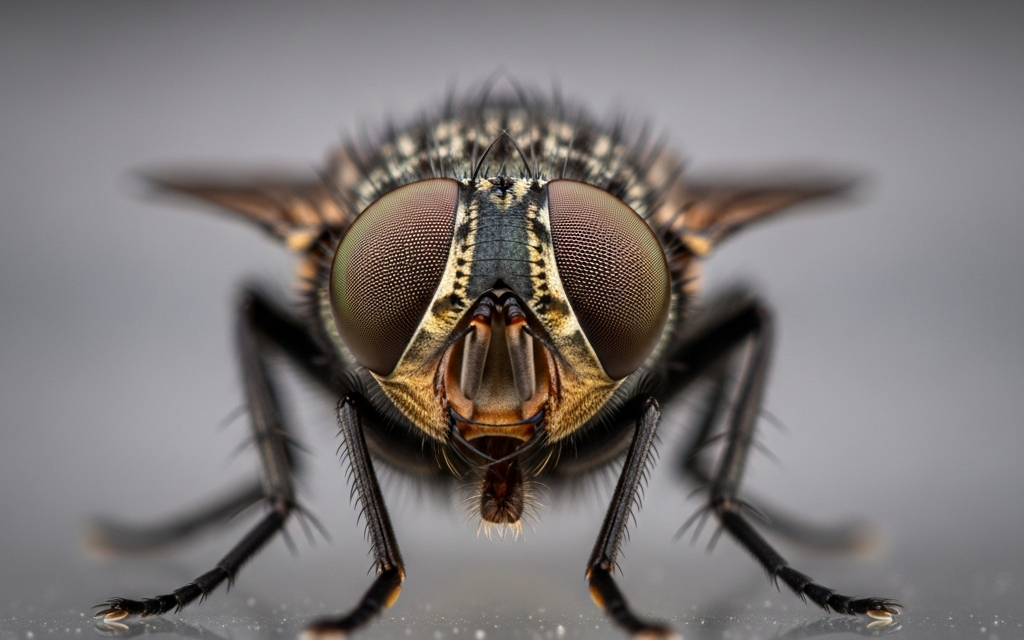
Flies (order Diptera) are major disease vectors in homes, businesses, and industry in Mexico. The most relevant species include the house fly (Musca domestica), fruit/vinegar flies (Drosophila spp.), green bottle flies (Lucilia sericata), drain and phorid flies (Psychoda / Phoridae), and the stable fly (Stomoxys calcitrans). Their short life cycle allows explosive growth: a house-fly female can lay up to 900 eggs and finish egg-to-adult in 7–10 days in warm conditions. Lasting control combines sanitation, exclusion, and Integrated Pest Management (IPM); spraying alone fails if breeding sites remain.
Common fly types in Mexico
Knowing the species points to the breeding source and the right control. In Toluca, Mexico City (CDMX), and Querétaro these are the usual residential and commercial pests:
House fly (Musca domestica)
Dark gray, 6–9 mm, four thoracic stripes. Breeds in garbage, manure, food waste, and moist organic matter. Does not bite, but is the top mechanical vector in kitchens, restaurants, and food plants.
Fruit / vinegar fly (Drosophila spp.)
Tiny (2–4 mm), yellow-brown, reddish eyes. Breeds in ripe fruit, juices, bar drains, fermenting residues, and sugary waste. Common in homes, cafés, and food retail.
Green bottle / blow fly (Lucilia / Calliphora)
Metallic green or blue. Attracted to meat, carcasses, and decaying animal matter—relevant in butcheries, waste rooms, and organic dumpsters. Signals a strong putrescible focus.
Drain and phorid flies
Small moth-like (Psychodidae) or humpbacked (Phoridae) flies. Breed in organic film inside drains, grease traps, cleanouts, and sludge. If they persist near bathrooms or kitchens after surface cleaning, inspect traps and drain lines.
Stable fly (Stomoxys calcitrans)
Looks like a house fly but bites. Linked to livestock, manure, and peri-urban sites; can affect homes near stables or fecal waste buildup.
Breeding sources
Without removing breeding sites, adults return within days. Typical sources in Mexico:
- Open or poorly sealed trash; damp waste rooms.
- Drains, floor drains, grease traps, and cleanouts with organic film.
- Ripe fruit, juices, bar waste, and fermenting residues (fruit flies).
- Food scraps in kitchens, break rooms, service yards, and hard-to-clean equipment.
- Animal manure, pet cages, and organic loading docks.
- Standing water, sludge, filters, and permanently wet wash areas.
Identification
Flies measure 2–12 mm by species. Color ranges from dark gray (house fly) to yellow-brown (fruit fly), metallic green/blue (bottle flies), or small grayish drain flies. They have one pair of wings plus halteres and large compound eyes. They settle near decaying organics, garbage, manure, and exposed food.
Useful detail: they constantly rub their legs to clean sensory receptors and detect food with high sensitivity. The house fly does not bite; the stable fly does. Both can contaminate surfaces and food.
Signs of infestation
Populations grow fast—act on these signs:
- Adults persistently around garbage, drains, ripe fruit, or food-prep areas.
- Dark specks (defecation and regurgitation spots) on walls, lamps, ceilings, and nearby surfaces.
- White larvae (maggots) in garbage, decaying matter, or dirty drains.
- Decay odors or clogged drains pointing to nearby breeding sites.
- High catches on UV or sticky traps within a few days (commercial monitoring).
Risks
Flies are mechanical vectors carrying over 100 pathogens on legs and mouthparts, including bacteria linked to diarrhea, dysentery, cholera, typhoid, and conjunctivitis. They contaminate food by landing and by regurgitating digestive juices. In food industry, hospitality, and healthcare, their presence drives audit non-conformities and reputational risk. In homes they signal hygiene gaps and attract related waste pests.
Commercial vs residential
Commercial/industrial (restaurants, central kitchens, plants, hospitals, hotels): needs breeding-site diagnosis, barriers (screens, air curtains), documented UV traps, drain/grease sanitation, and an IPM plan with records. Tolerance is low for food safety and audits.
Residential: often solved with strict hygiene, closed bins, drain cleaning, and exclusion (screens). If flies persist after sanitation—or breeding is hidden in drains or shared service yards—schedule a professional inspection.
When to treat or fumigate
Fly “fumigation” does not replace breeding-site removal. Call for professional treatment when adults persist after deep cleaning; the site is a kitchen, restaurant, food plant, or hospital; you cannot find the source; larvae are in structural drains or waste areas; or you need documented compliance (IPM, COFEPRIS/NOM).
Technicians combine directed sanitation, larvicides at foci, targeted adulticides when needed, and monitoring. Blind spraying without sealing trash and cleaning drains only buys temporary relief.
How Fucesa controls it (IPM + sanitation)
At Fucesa we use Integrated Pest Management against the full life cycle, not just visible adults:
- Sanitation and breeding-site removal: drains, containers, organics, and grease traps.
- Physical barriers: window screens, air curtains, and self-closing doors.
- UV light traps and sticky traps for capture and adult monitoring.
- Targeted applications and larvicides at identified hotspots by certified technicians.
- Operational coaching for businesses: waste handling, end-of-shift cleaning, and sealed refuse.
Prevention
Sanitation is the best defense:
- Keep garbage in closed containers; clean waste areas often.
- Clean spills, food residue, and ripe fruit immediately; do not leave food exposed.
- Wash and disinfect drains to remove the organic film where larvae develop.
- Install and maintain screens; repair damaged mesh.
- In businesses: empty grease traps on schedule and dry wash areas at close.
When to call a professional
If flies persist despite cleaning, if activity is in a restaurant, industrial kitchen, hospital, or food plant, or if you cannot locate the breeding site, call a professional. Finding the source is usually the difference between lasting control and constant reinfestation.
Fucesa has over 40 years of pest-control experience and operates under NOM-256-SSA1-2012 with COFEPRIS registration, delivering safe, technically backed programs for homes, businesses, and industry.
Get a fly control quote
Need to request a fly fumigation quote or an IPM plan for residential or commercial sites in Toluca, Mexico City (CDMX), or Querétaro? Ask for our insect control with certified technicians. 40+ years from our Toluca headquarters and Querétaro base. Contact and quote: we inspect breeding sites and recommend the right treatment—not just visible adults.