Sewer cockroach: what it is, how to seal drains, and when to fumigate
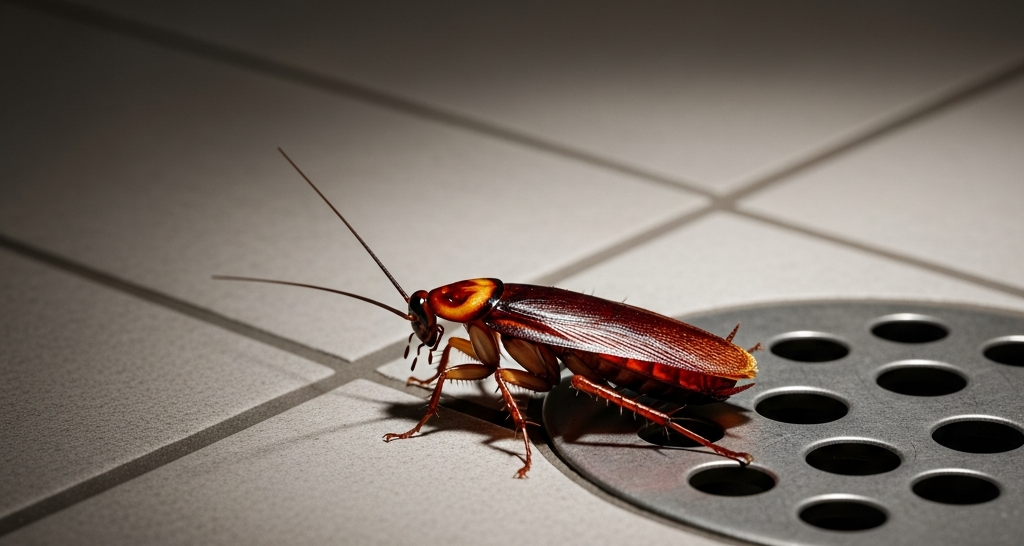
What is a sewer cockroach?
The sewer cockroach — also called drain cockroach — is almost always the American cockroach (Periplaneta americana), the largest species found in Mexican homes: it measures 3.5 to 5 cm, is reddish brown, and has wings that let it glide short distances. It lives in sewers, floor drains, access boxes, and pipes, where it finds moisture, warmth, and organic debris, and from there it climbs into bathrooms, kitchens, and patios.
It is one of the most common species in the country along with the German cockroach; you can compare their differences in our guide to the types of cockroaches in Mexico.
How to identify a sewer cockroach
- Large size: 3.5 to 5 cm long, the biggest of the household cockroaches.
- Shiny reddish-brown color, with a yellowish band behind the head.
- Developed wings: it can glide short distances, especially on warm nights.
- Long antennae and fast movement; it is mainly nocturnal.
- Appears near floor drains, access boxes, sumps, bathrooms, and kitchens.
If you found cockroach droppings or feces
Detailed droppings / feces identification lives on our dedicated guide: cockroach droppings (Spanish: popo de cucaracha). This article focuses on the sewer species and sealing drains, not on recognizing feces.
Why do cockroaches come out of drains?
Cockroaches leave the drain system looking for food and water, or when something disturbs their habitat: heavy rain flooding the network, street fumigation, or extreme heat. The most common entry routes are:
- Floor drains without covers or with wide-gap grates.
- Dry P-traps: in rarely used bathrooms or sinks, the water seal evaporates and leaves the way open.
- Gaps around pipes, poorly sealed access boxes, and loose joints.
- Food scraps and grease built up in kitchen drains.
Health risks
Because it lives in sewers and decomposing matter, this cockroach can carry bacteria such as Salmonella and E. coli onto surfaces and food. It can also worsen allergies and asthma (per the Asthma and Allergy Foundation of America (AAFA)), especially in children. For how to recognize feces or droppings, see cockroach droppings.
How to keep them from coming up through drains
- Fit fine-mesh grates or covers on all floor drains, and cover them at night if you see activity.
- Pour water weekly into rarely used drains to keep the P-trap's water seal intact.
- Seal gaps around pipes and access boxes with silicone or cement.
- Flush kitchen drains with hot water and avoid pouring grease.
- Check that outdoor access boxes and cistern covers sit flush, without cracks.
These measures work best combined with the general routines we explain in how to prevent a cockroach infestation at home.
Tonight’s kit: P-trap, check valve, and biofilm
Grates stop what already climbed; the P-trap (water seal) is what should block the pipe. Guest baths, laundry sinks, or floor drains unused for weeks dry out and open a free path from the municipal sewer. Pour at least a liter of water into those drains every 7 days—cheap exclusion, and the step homes most often skip in rainy season.
If American cockroaches still appear several times a week after grates and wet traps, consider a check valve on the main line to the sewer or flexible silicone membranes on patio drains. That does not replace sealing gaps around pipes; it helps when backflow or persistent migration from the public network continues.
Biofilm (grease and organic film in pipes) feeds activity near your home. Prefer enzymatic or bacterial drain cleaners over harsh caustics that damage pipes and miss the harborage. IPM (EPA): remove food and moisture, seal access, monitor; household spray on what you see does not close the drain. If one night’s kit is not enough, quote cockroach control or reach contact.
Can you get rid of them with home remedies?
Household sprays kill the cockroaches you can see, but they never reach the source of the problem: the drain network. As long as the access stays open, they will keep coming. We explain when each option makes sense in cockroaches at home: DIY or professional fumigation?
Fucesa: professional sewer cockroach control
At Fucesa we treat the problem at its source: we inspect drains and access boxes, apply gel and residual treatments at entry points, and advise you on permanent sealing. Learn about our cockroach control service or request an inspection in Toluca, Metepec, and the State of Mexico.
When do sewer cockroaches peak?
In central Mexico the peak usually lines up with heat and rain: in summer they leave the municipal network looking for cooler spots or food; heavy storms flood sewers and access boxes; in fall they seek warm basements and garages. Winter activity drops without artificial heat. If you see several in one week after a storm, check floor drains and P-traps before relying on spray cans.
Do they breed indoors?
Almost never. American cockroaches nest mainly in sewers, access boxes, and wet organic matter outside or under the building. One or two in the bathroom are usually drain visitors. Daily sightings across floors or near shared stacks mean the source is the network — killing what you see is not enough — and a professional inspection helps.
When should you hire a professional?
Call an authorized service if: (1) you still see several a week despite fine grates and wet traps; (2) activity spans several units or floors; (3) you need a fumigation certificate for food or hospitality; or (4) you cannot reach shared stacks or outdoor boxes. At Fucesa we inspect entry points, apply gel/residual where it belongs, and advise on sealing. See cockroach control or request a quote.
Regulatory note: under Mexico’s NOM-251-SSA1-2009 for food establishments, drains need sound grates and odor traps — the same exclusion logic helps homes even when that standard does not apply.
Frequently asked questions about sewer cockroaches
What does it mean to see a large cockroach in the bathroom?
It almost always means there is an open path from the drain system: an uncovered floor drain, a dry P-trap, or a gap next to a pipe. One or two American cockroaches are usually visitors from the drain, not a colony inside the house — but you should close the access as soon as possible.
Can cockroaches come up through the toilet?
It is uncommon: the toilet's water seal stops them. The risk increases in bathrooms that go weeks without use, where the trap water evaporates. Floor drains and sinks are far more frequent routes.
Do sewer cockroaches fly?
They have functional wings and can glide short distances, especially in warm weather. Rather than flying long distances, they glide down from high spots, which is what startles people indoors.
How do you seal floor drains against cockroaches?
Use fine-mesh metal or plastic grates (available at hardware stores), silicone covers at night, and sanitary silicone around the edges. For outdoor access boxes, make sure the lid sits complete and crack-free.
Sources and references
U.S. Environmental Protection Agency (EPA). Integrated Pest Management (IPM) — IPM principles for cockroach prevention and control.
University of Minnesota Extension. Cockroaches — identification and household cockroach habits.
COFEPRIS (Government of Mexico). gob.mx/cofepris — sanitary regulation of pesticides and pest-control services.
For professional control see cockroaches, our insect control service in Toluca, Mexico City and Querétaro. Contact and quote.
