Fleas: what they are, types, and how to control them
Quick answer
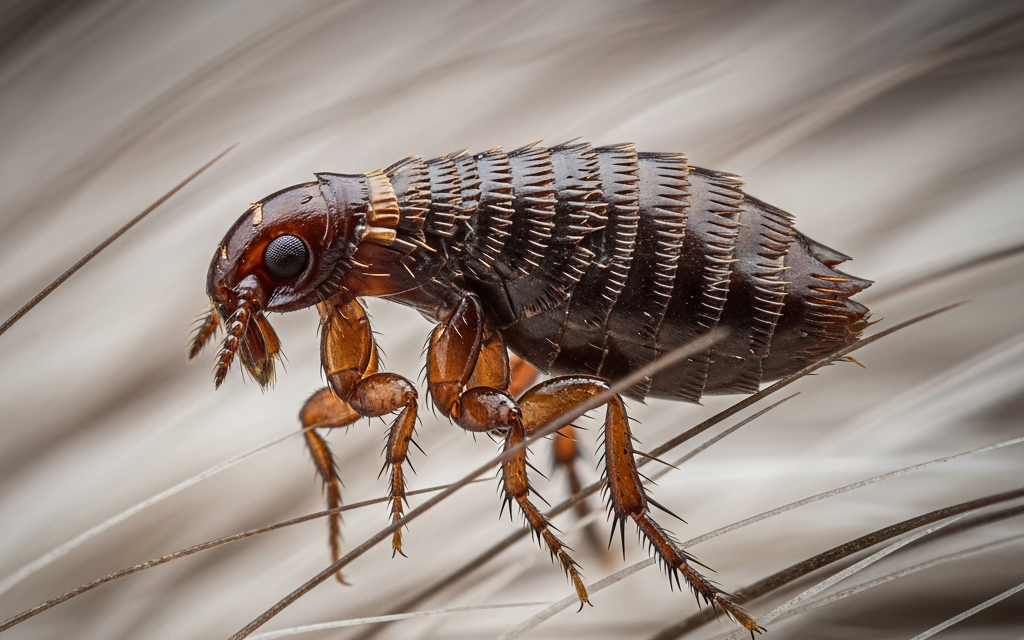
A flea is a tiny, wingless, jumping insect that feeds on blood. In Mexican homes it is almost always the cat flea, which also bites dogs and people. Only about 5% of the population is on the pet: the rest are eggs, larvae, and pupae in carpets, sofas, and beds, which is why treating the animal alone is not enough. For step-by-step removal, see our guide to fleas at home: how to eliminate them; below you will find types, life cycle, signs, and when to treat in Toluca, Mexico City, or Querétaro.
The flea (order Siphonaptera) is a blood-feeding parasite and one of the most frustrating household pests in Mexico. When people say they have fleas at home, it is usually the cat flea (Ctenocephalides felis)-which also infests dogs, rodents, and, when pets are absent, people. A single female can lay 20-50 eggs per day; warm, humid conditions speed the egg-to-adult cycle, and the pupa can stay dormant for months until it senses vibration, heat, and CO2 from a host. That is why a small flea problem becomes severe within weeks unless you treat the environment (carpets, furniture, and pet beds) as well as the animal.
What fleas are and why they matter
Fleas are wingless insects with a laterally flattened body and powerful hind legs for jumping (up to about 150 times their body length). They do not "live" only on the pet: only about 5% of the population is on the host; the other 95% (eggs, larvae, and pupae) is in the surroundings-especially carpets, upholstery, cracks, under furniture, and shaded yard areas. Bathing the pet or adding a collar without treating the property leaves a reservoir of fleas that will reinfect the animal.
Flea types: cat, dog, and human
In homes across Toluca, the State of Mexico, Mexico City, and Querétaro, several species may appear. Knowing the type helps target hotspots:
Cat flea (Ctenocephalides felis)
The most common indoor flea. Despite the name, it infests cats, dogs, and often people. It thrives in temperate-to-warm interiors and breeds readily in carpets and rugs.
Dog flea (Ctenocephalides canis)
Less common than the cat flea in urban interiors, but it shows up on dogs with yards, gardens, or contact with other animals. Environmental control is similar.
Human flea (Pulex irritans) and others
The human flea can bite people and other mammals; in Mexico it is more often linked to crowding or uncontrolled wildlife than to a "people-only" modern home. Rodent or wildlife fleas can also enter via yards or basements. In practice, an IPM program treats the environment regardless of the dominant species.
Flea life cycle
Fleas develop in four stages. Understanding the cycle explains why a single "quick" product rarely works:
- Egg: tiny white eggs drop from the animal onto beds, sofas, and carpets.
- Larva: avoids light; feeds on organic debris and adult flea dirt (digested blood); lives in fibers and dust.
- Pupa: forms a sticky cocoon; can wait months for vibration, heat, or CO2. This stage resists many over-the-counter insecticides.
- Adult: emerges, finds a host, feeds on blood, and reproduces. Only adults bite.
Killing only adults leaves pupae ready to emerge days or weeks later. That is why Fucesa combines adulticides, insect growth regulators (IGRs), and a follow-up visit.
Signs of fleas on pets and in the home
Fleas often go unnoticed until numbers are already high. Check both the pet and the house:
- Pets scratching: dogs and cats that scratch, bite, or lick persistently (back, base of the tail, neck, belly).
- Flea dirt: black, pepper-like specks on the coat or bedding; dampened on white paper they turn reddish (digested blood).
- Jumping fleas: tiny insects when you walk across carpet or grass; white socks make them easier to spot.
- Indoors: activity on sofas, rugs, carpet edges, under beds, and where the pet sleeps.
- After travel: returning to a closed home can trigger a mass pupal emergence-the classic "fleas from nowhere" spike.
What flea bites look like (not a medical diagnosis)
On people, flea bites often appear as small, red, intensely itchy welts, sometimes in groups or lines, favoring ankles, calves, and areas near the floor. This is not a substitute for medical care: seek a health professional for severe swelling, infection signs, fever, or allergic reaction. On pets, constant scratching may relate to flea allergy dermatitis (FAD); a veterinarian should guide animal treatment.
Important: Fucesa does not diagnose disease. We address the pest and environmental control; for human or animal health, see a doctor or veterinarian.
How fleas spread
Fleas enter and spread in several ways:
- Pets: walks, parks, visits to other homes, or contact with infested animals.
- Environment: eggs and larvae in carpets, rugs, cars, carriers, and pet bedding.
- Outdoors: shaded yards, weeds, and wildlife (rodents and others) near the property.
- Vacant spaces: dormant pupae that "wake up" when a home or premises is occupied again.
Carpets, upholstered furniture, and vehicles
Fibers hold eggs and larvae. A serious flea plan includes:
- Deep vacuuming: carpets, rugs, sofas, low mattresses, baseboards, and under furniture; empty the canister or discard the bag right away.
- Hot washing: pet beds and blankets regularly.
- Upholstery and low curtains: common hotspots if the pet uses the sofa or bed.
- Car and carrier: if the pet rides with you, vacuum seats and mats-or you reintroduce fleas after treating the house.
In advanced infestations, professional treatment of surfaces and cracks goes beyond what DIY vacuuming alone can achieve.
DIY limits vs professional control
Collars, spot-ons, sprays, and fogger bombs can reduce visible adults but often fail against pupae and hidden hotspots in furniture and carpets. Common DIY pitfalls: under-dosing, wrong product for the surface, unnecessary exposure of children/pets, and a false sense of control while the cycle continues. If bites continue after treating pets, fleas return in 2-3 weeks, or several rooms are involved, household products are no longer enough.
IPM: Integrated Pest Management for fleas
Effective flea control is based on IPM, not a single "magic fumigation":
- Inspection: find hotspots (beds, carpets, cracks, shaded yard).
- Sanitation: vacuuming, washing, and reducing harborage before or with treatment.
- Environmental treatment: professional-use products and IGRs that interrupt eggs and larvae.
- Veterinary coordination: appropriate pet flea products in parallel with the property.
- Follow-up: a second visit in 2-3 weeks for adults emerging from dormant pupae.
When to fumigate or treat for fleas
Schedule professional treatment when: people keep getting bites despite pet treatment; carpets/furniture clearly show activity; several rooms are involved; a business has animal or textile traffic (hotels, clinics, etc.); or after moving into a long-closed property. "Fumigate" in everyday language here means professional environmental treatment; Fucesa chooses methods based on diagnosis, prioritizing efficacy and safety when re-entry instructions are followed.
How Fucesa controls fleas
Fucesa coordinates the pet (via veterinary recommendation), indoors, and outdoors:
- Technical inspection: mapping breeding hotspots in home or business.
- Targeted treatment: adulticides + IGRs on critical zones (carpets, upholstery, cracks, resting areas).
- Exterior: when the yard or perimeter drives reinfestation pressure.
- Follow-up: a reinforcement visit to break the pupal cycle.
We operate under NOM-256-SSA1-2012 and a COFEPRIS health license, with more than 40 years of pest control experience.
Flea prevention
- Year-round veterinary program: flea prevention all year, not only in "season".
- Frequent vacuuming: especially where the pet sleeps and plays; empty the vacuum contents.
- Wash textiles: pet beds and blankets regularly on a hot cycle when the fabric allows.
- Yard: short grass, less weeds, and control of wildlife/rodents that bring fleas.
- After trips: check the pet and vehicle on return.
When to call a professional
If bites continue, fleas return after deep cleaning, you have children, older adults, or sensitive pets at home, or you need a documented plan for a business, call a certified team. Resistant pupae and fast reproduction mean over-the-counter products rarely solve the root problem.
Frequently asked questions
Is a flea an insect or an arachnid?
It is an insect in the order Siphonaptera: six legs, a body flattened side to side, and no wings. Arachnids such as mites and ticks have eight legs.
How many types of fleas are there?
More than 2,000 species have been described worldwide, but in Mexican homes it is almost always the cat flea (Ctenocephalides felis). Less often you will find the dog flea (Ctenocephalides canis) and the human flea (Pulex irritans).
Do I need to treat the house if I already treated my pet?
If bites continue after veterinary treatment, most of the infestation is in the environment: carpets, furniture, and beds. In that case an environmental treatment with insect growth regulators (IGRs) plus a follow-up visit for pupae that emerge later is the right step.
Get a flea control quote
Dealing with a flea or fleas at home, work, or in a vehicle? Request a quote for our insect control service. We cover Toluca, the State of Mexico, Mexico City, and Querétaro. Reach us via contact and we will build a tailored IPM plan.